





Dog Waste Stations for Shared Green Spaces: Planning the Basics
A dog waste station is only useful when people can find it and someone keeps it supplied and serviced. Installing a dispenser and bin does not, by itself, create a maintenance plan for a shared lawn or walking area.
Before a neighborhood, rental community or property manager buys equipment, settle the responsibilities behind it. The questions below help turn a hardware idea into a clear scope of work.
Start with the way people use the space
Walk the paths and identify where dog owners enter, pause and return. Consider whether a proposed location can be reached conveniently without blocking the path or interfering with other uses. Confirm placement with the person responsible for the property and any applicable site requirements before installation.
Do not choose a location only because it is easy to install there. The people supplying bags and emptying the bin also need practical access. The EPA’s pet-waste management guidance discusses waste stations as part of a broader program of pickup, disposal and public education.
Assign each maintenance job
Write down who checks the station, replenishes bags, empties the bin and handles damaged equipment. Decide how that person will learn about an empty dispenser or an overflowing bin. A label saying ‘maintained regularly’ is not a substitute for an assigned responsibility.
The right inspection rhythm depends on actual use. Review conditions after the station is introduced rather than assuming one frequency will suit every season or location. Keep the disposal method consistent with the local waste provider’s requirements.
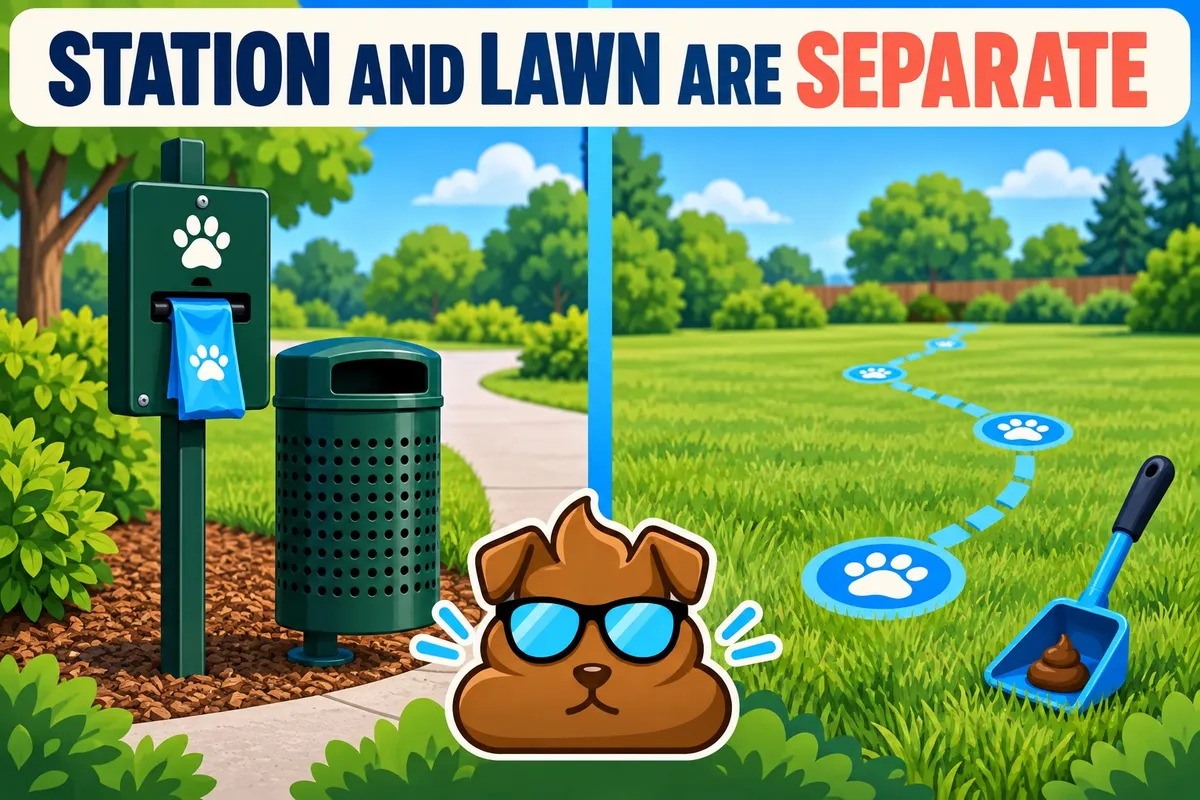
Keep station servicing separate from ground pickup
Emptying a station bin and searching the surrounding lawn for dog waste are different tasks. A contract can include either or both, but the boundaries should be explicit. Installation, replacement parts and bag supplies may be separate again.
When requesting an estimate, list the number and type of stations, the areas needing ground pickup, available access and the requested frequency. Ask the provider to confirm which tasks are offered and included. Do not assume that residential poop-scooping rates cover a shared facility.
Give residents a clear expectation
A station makes bags and a disposal point available; it does not transfer all responsibility for a dog’s waste to the next maintenance visit. Use concise site guidance explaining pickup and disposal without making unsupported promises about health, sanitation or enforcement.
Track the practical problems you observe: missing bags, bin capacity, scattered waste or an awkward location. That gives the property manager a basis for making a targeted change.
Our HOA and shared-green-space guide explains custom scope. Review Purge Pros’ service options and text (317) 961-5865 or call to discuss the property. Confirm station-related availability and pricing directly; the standard residential price tool should not be treated as a quote for station installation or maintenance.