





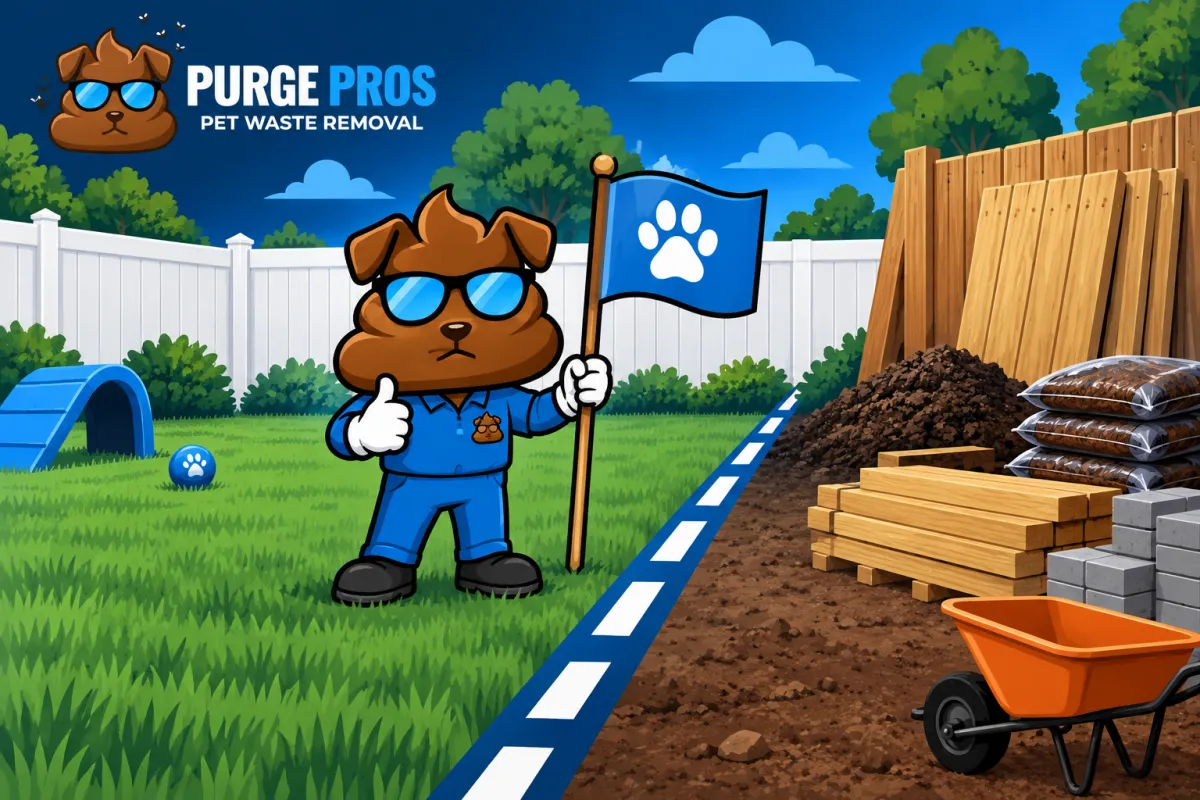
Construction Debris or Dog Waste? Set the Cleanup Scope Before Service
A backyard can hold several kinds of work at once: dog waste pickup, a fence project, a mulch delivery, a stack of boards, or a pile of soil. Those items may sit in the same photo, but they do not automatically belong to the same service. A clear scope keeps a routine poop-scooping request from being mistaken for construction cleanup or landscaping labor.
Before service day, separate what needs to be collected from what needs to be moved, hauled, repaired, or left alone. That small piece of planning gives everyone a more accurate picture of the yard.
Start with the material, not the pile
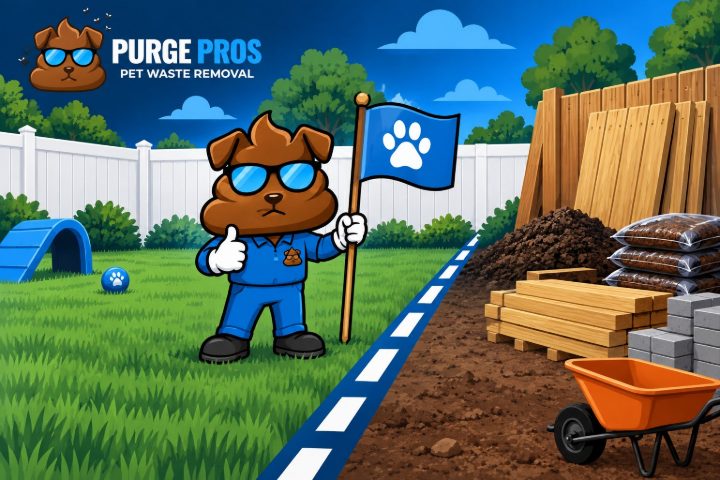
Dog waste pickup is about finding and collecting pet waste in the outdoor areas that have been agreed for service. Construction and landscape projects create different materials and responsibilities. Broken fence panels, nails, scrap wood, concrete pieces, excavated soil, brush, mulch, plant containers, and loose stone should be identified as project material rather than assumed to be part of scooping.
Leaf piles and bagged waste can also look similar from a distance. Keep pet-waste bags separate from leaf or yard-waste piles, and follow the disposal instructions that apply to each material. If a contractor, hauler, or property manager is responsible for the project debris, keep that handoff with them.
Mark the areas the scoop team should search
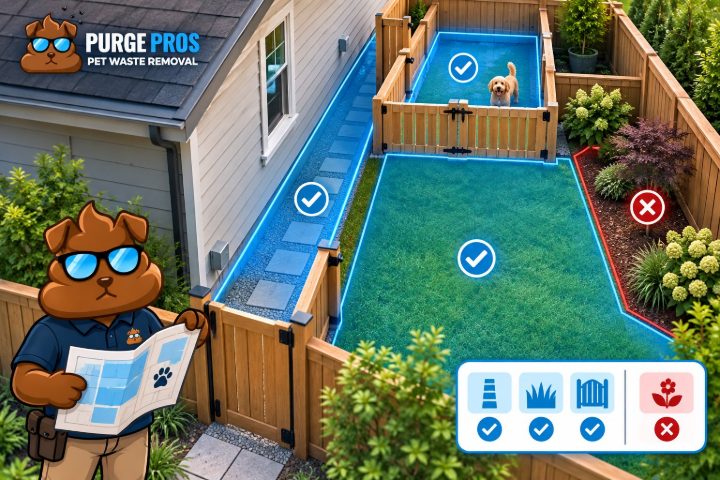
Describe the actual dog-use zones: the back lawn, a side run, a courtyard, a fenced relief area, or another section where pickup is requested. Then mark the areas that are temporarily excluded because they contain equipment, fresh work, open trenches, new plantings, or material that should not be disturbed.
A simple note can use three labels: search for the agreed pet-waste areas, avoid for restricted project areas, and access for the path and entrance the team should use. If dogs are using a different section while work is underway, say so before the next visit. A temporary change in use can change the requested scope, even when the address has not changed.
Make the contractor handoff visible
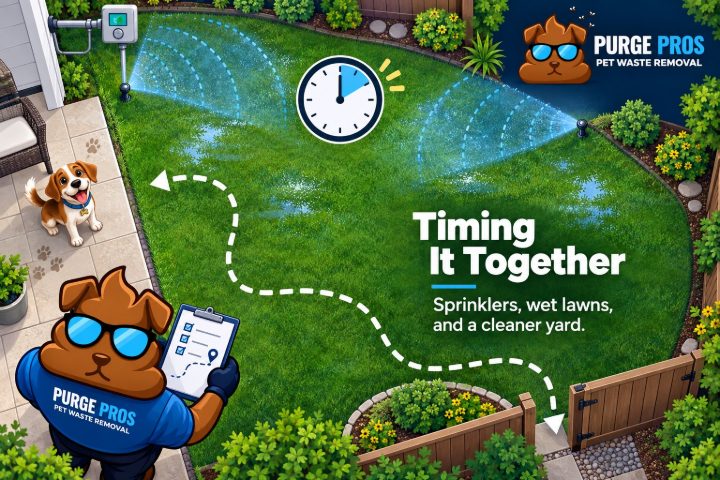
Tell the cleanup team when a gate, path, or part of the lawn will look different. Tell the project contractor which entrance and areas must remain clear for the household. Do not assume the two providers will exchange instructions or arrive in a particular order. If one crew needs a clear route, decide who moves tools, hoses, or materials before the visit.
A contractor's schedule can move because of weather or project progress. Leave room for that change instead of promising an exact same-day sequence. When the work changes the gate or fence, the existing fence and landscaping coordination guide has a useful access checklist.
Ask separately about work outside pickup
If you need brush removal, soil relocation, debris hauling, leaf collection, pressure washing, lawn repair, or fence work, ask the provider responsible for that job how it is handled. A dog waste request should not quietly expand into a second service because the materials were visible when someone arrived.
For a larger property or a commercial project, list each material and area in the request. The custom estimate checklist explains how to describe sections, access, conditions, and responsibility without guessing at a precise measurement.
Send one short scope summary
Before the visit, write down the service address, dog-use areas, excluded work zones, correct entrance, pet arrangement, current condition, and the person handling project questions. State plainly that the requested work is dog waste pickup in the listed areas. If the yard cannot be entered or searched as agreed, contact the team about the next step before relying on the old plan.
Read the Purge Pros dog waste removal details to review the regular service scope, then check your ZIP and build a quote for the property you want serviced. A clear boundary helps the request match the work the yard actually needs.