





Wet Lawn, Working Sprinklers: Coordinate Yard Access Without Promising a Dry Visit
A lawn can be wet because of rain, a sprinkler cycle, a leaking hose, or a low spot that holds water. Those conditions matter when you are coordinating dog waste pickup, but they do not create a promise that the yard will be dry by a certain hour. The useful goal is a realistic access plan that tells the service team what the property is likely to be like.
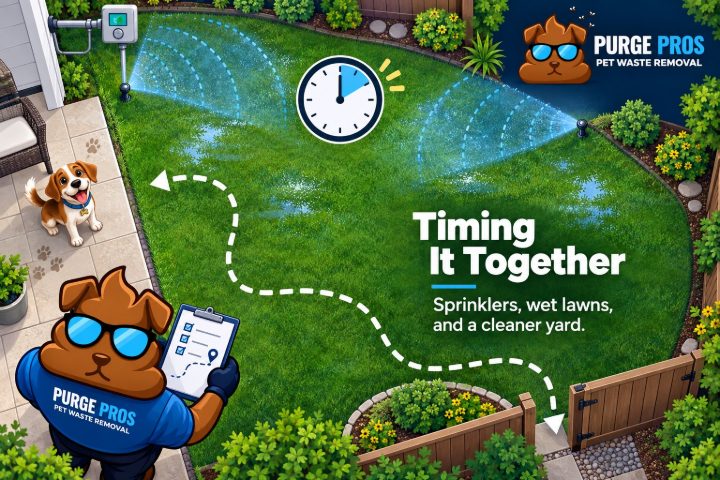
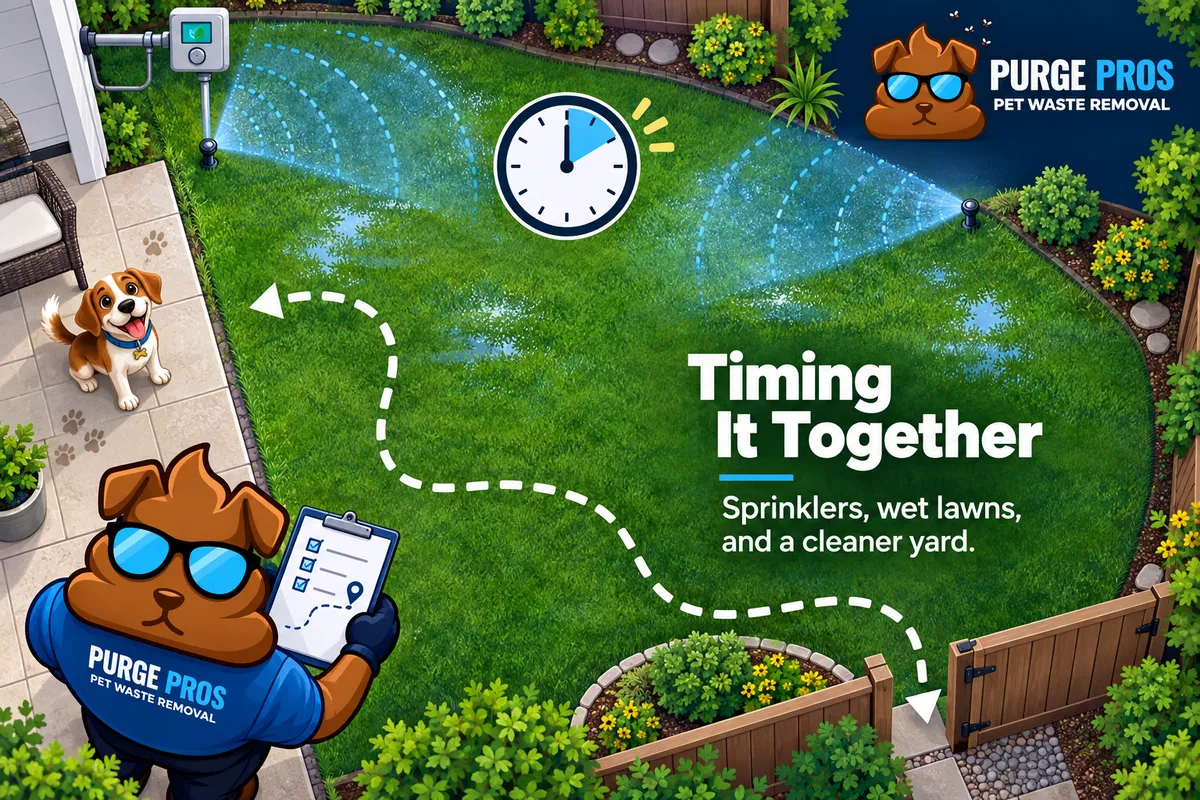
Sprinkler timing is a household detail to communicate, not a way to guarantee a service-day result. Share the pattern you know, leave room for weather and route changes, and keep the cleanup scope clear.
Write down the sprinkler rhythm
Note which zones run, what days they usually run, and whether the controller starts before dawn, during the day, or in the evening. Include a separate drip line, hose timer, or manually watered garden if it affects the entrance or the areas where dogs relieve themselves. The team does not need a complicated irrigation diagram; it needs the practical details that affect access.
If only one side yard is watered, say which section. A wet strip beside a dry lawn can change where a person walks and where a gate can be opened. If a controller was recently changed, send the update before the next visit rather than relying on an older note.
Choose a workable window without promising dry ground
You may prefer pickup after the last morning cycle or before an evening cycle. Share that preference and ask what service-day timing is available. A preferred window is a planning request, not a reserved arrival time. Weather, route changes, and a sprinkler adjustment can all make the ground different from what you expected.
Keep the access path, gate swing, and dog arrangement in mind. A wet path may need a different safe route, while a closed gate may prevent a simple change after the team has arrived. Do not ask the team to decide whether a saturated planting bed, newly seeded area, or slippery surface is ready for foot traffic. Follow the instructions from the irrigation or landscaping provider for those areas.
Separate wet conditions from the pickup scope
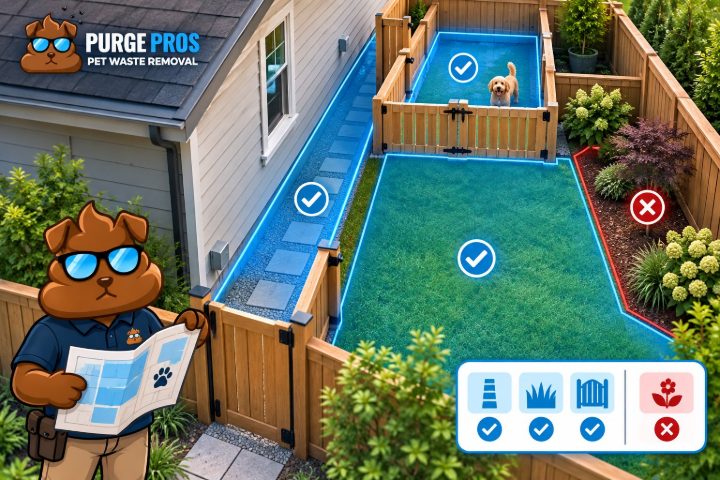
Routine dog waste removal addresses pet waste in the agreed outdoor sections. It does not turn into irrigation repair, drainage work, mowing, leaf removal, or lawn restoration because the ground is wet. Describe standing water, muddy access, long grass, or a restricted section so the current condition is understood before service.
A wet lawn can also make visibility different. A recent rain or sprinkler cycle may flatten grass or change the path, but it does not replace a conversation about what can be searched and entered. The rain, mud, and timing guide covers the same kind of condition check from a weather angle.
Coordinate with other yard providers
If a lawn-care company controls the irrigation calendar, keep one household note with its usual service days and the areas that must stay restricted. Tell both providers when a cycle, treatment, mowing visit, or landscaping project changes the route. The lawn-care coordination guide explains why the household should own the shared access plan.
Do not promise the mower a dry lawn because a scoop visit is planned first. Do not promise the scoop team an exact order that the lawn provider has not confirmed. Ask each provider what preparation it expects and pass along only the information that affects its work.
Recheck the details after a controller change
After a seasonal schedule change, walk the route from the entrance to every agreed service section. Confirm that the latch works, the path is open, pets can be secured, and the sprinkler timing you shared is still accurate. If the yard remains wet or access is different, update the service conversation before the next visit.
Review the Purge Pros dog waste removal service, then check your ZIP and build a quote for the address. The quote and service review can describe the yard you actually have, without claiming that irrigation or weather will make it dry on demand.