





Narrow Side Yards and Separate Dog Zones: Describe the Scope Clearly
A narrow side yard can be easy for a dog to use and easy for a cleanup request to leave out. A separate dog run creates the opposite problem: it may be small, but it still needs its own boundary and access note. Describe each section that matters instead of relying on a single phrase such as backyard.
The useful question is not whether a side passage looks like a full lawn. It is whether the section belongs in the requested pickup scope, what surface it has, and how someone reaches it.
Name every dog-use zone
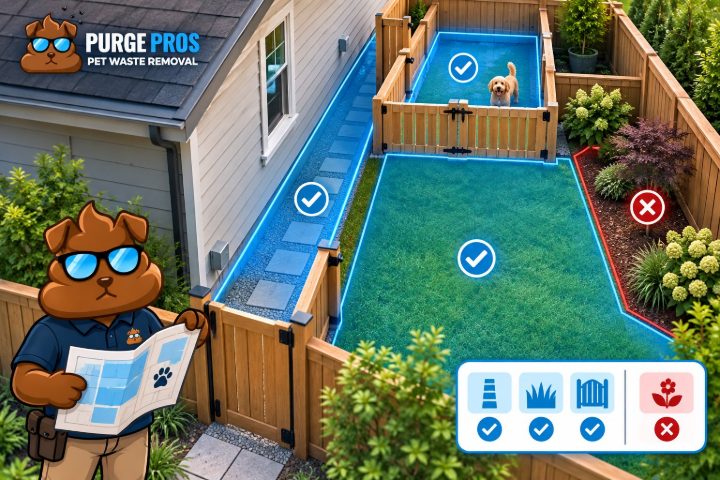
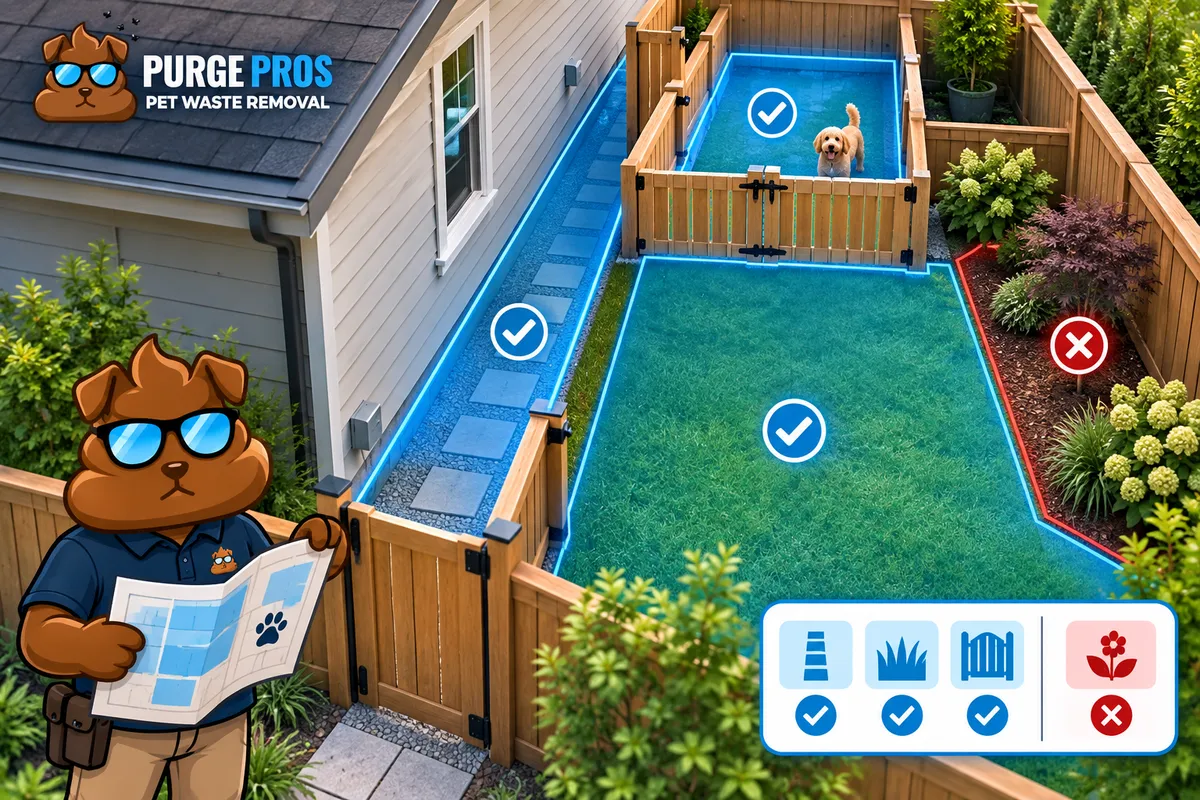
Start with a short list: main back lawn, narrow side yard, separate run, patio or other hard surface. Mark each one as included, excluded or needing review. If a planting bed sits beside the side passage, make the boundary visible. If the dogs use the path only occasionally, say that rather than silently omitting it.
Separate zones matter even when they are close together. A gate, fence panel, step or change of surface can turn one visual yard into multiple practical sections. Use a simple sketch or photo description to show where one zone ends and the next begins.
Describe a narrow passage with useful details
Give an approximate length and width when you can, along with the surface: grass, gravel, mulch, artificial turf, concrete or pavers. Note the gate location, the direction it opens, any tight turn and anything that reduces usable room. A shed, low branch, hose reel or stored bin can matter more than a rough measurement.
Do not overstate precision. An approximate width plus a clear photo or sketch is better than a confident number that includes a garden bed or stops before the actual gate. If a rectangle method helps, split the passage into a simple rectangle and keep the boundary note beside it.
Explain the separate run as a complete section
For a dog run behind an interior gate, list the gate and the route to it. State whether the run is grass, gravel, mulch or another surface, and whether the same dogs use the main yard as well. The published surface guide explains why the material and shape affect the questions worth asking.
A small run is not automatically simple. It may have more fence edges, a tighter entrance or a favorite corner that deserves specific attention. A clear description lets the provider discuss the actual section instead of inferring it from the size of the main lawn.
Keep access and scope together
Trace the physical route from the outside gate to each included area. Keep the gate swing clear, describe a latch that needs a particular movement, and identify sections that should not be entered. Do not assume that access through the house or a neighboring property is available. For a practical baseline, read the gate-access checklist before sending the request.
Also explain the pet arrangement. A dog boundary or interior gate does not replace a current plan for keeping pets separate while someone enters and closes the route.
Say what the scope does not include
Dog-waste pickup is different from mowing, heavy debris removal, moving substantial furniture, fence repair or deep surface cleaning. If one of those tasks affects a narrow section, mention it as a separate question. For more than an acre of cleanup area, commercial property or kennel needs, use the custom-estimate path rather than forcing the request into a standard selection.
Build the request from the map
Explore Purge Pros dog waste removal and check your ZIP and price options. Include dog count, frequency, the main lawn, the narrow side yard and any separate run. If a section is uncertain, describe why. Clear scope gives the team something specific to confirm before a recurring route is arranged.