





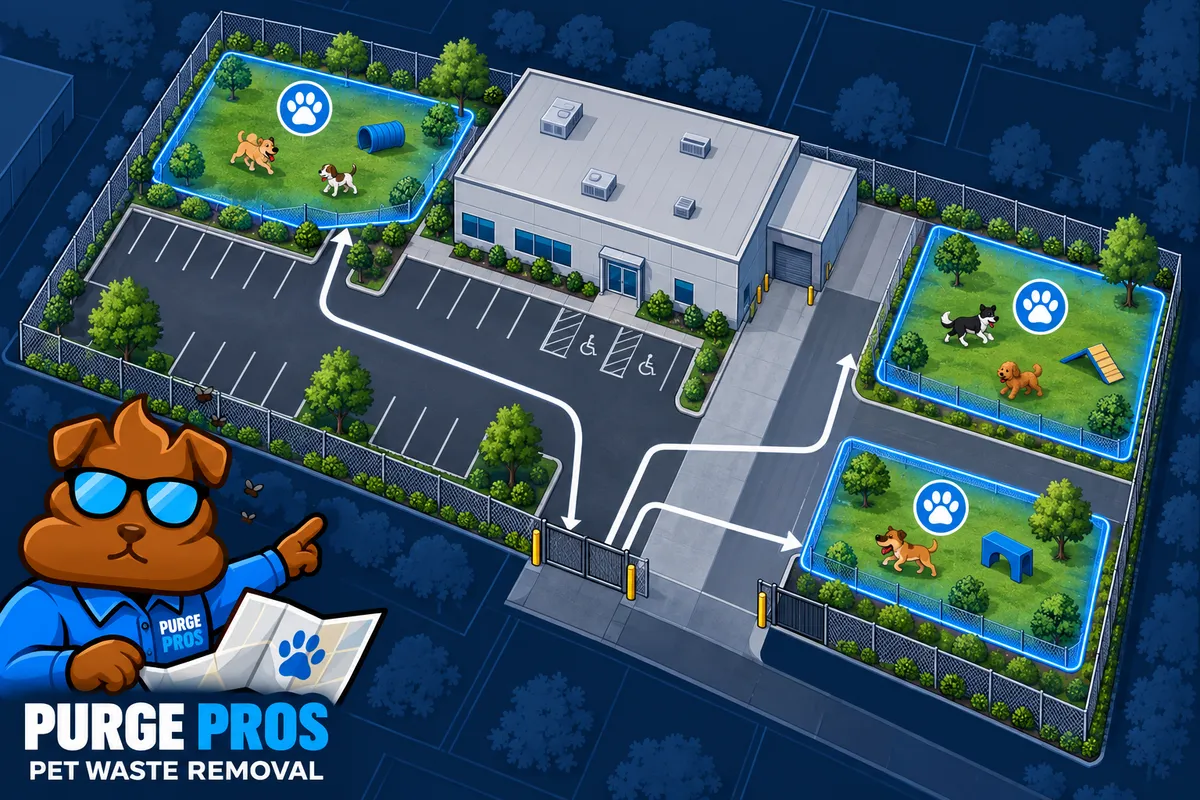
Commercial Dog Waste Estimates: Map Dog-Use Zones, Parking and Buildings
A commercial dog-waste estimate becomes easier to review when the site map shows how the property is actually used. A large parcel may include dog relief areas, fenced runs, parking, buildings, loading zones, sidewalks, employee paths, and sections that should not be entered. The whole property is not automatically the cleanup area.
A useful map does not need survey precision. It needs honest labels, clear boundaries, and enough access information for the estimate conversation to focus on the work that is requested.
Draw the dog-use zones first
Start with the outdoor areas where dogs actually relieve themselves or where pet-waste pickup is requested. Label each zone separately: a fenced run, play yard, relief strip, courtyard, kennel exercise area, or another named section. If dogs use different zones at different times, note that pattern instead of combining everything into one shaded shape.
Write down which areas are included and which are excluded. A map that only shows the parcel outline leaves the team guessing about the requested search area. The custom estimate checklist has the same principle in a broader request format.
Mark parking, buildings, and other non-service space
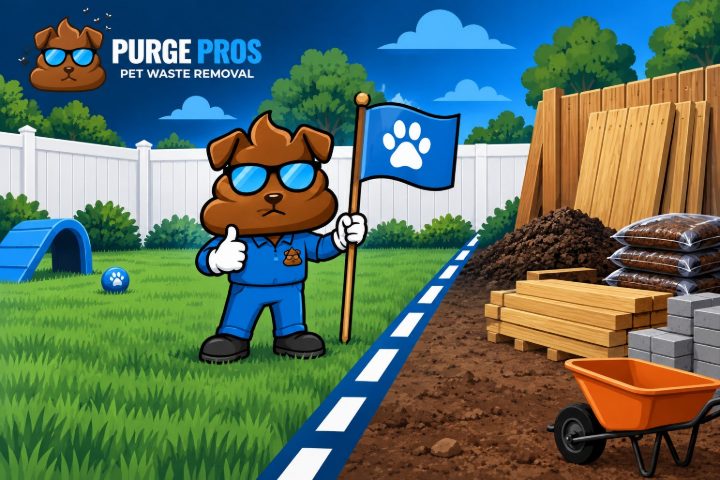
Use a different color or label for parking lots, drive lanes, buildings, dumpsters, loading docks, patios, planting beds, and employee-only sections. These spaces may matter for travel and access, but they are not automatically dog-waste pickup zones. Showing the difference helps avoid turning a parcel size into an assumed service area.
Identify hard surfaces that dogs use and need included, such as a paved relief strip, while also identifying areas that the team should not enter. If a surface needs washing, repair, or another treatment, list that as a separate question for the appropriate provider. Keep the map focused on collection scope.
Show every practical entrance
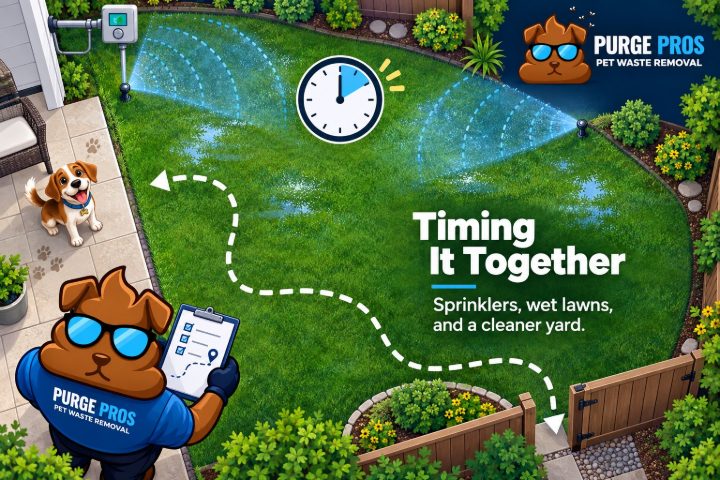
Mark the gate or entrance the cleanup team should use, the route to each dog-use zone, and any interior gates. Note whether a property manager, kennel lead, or another person controls access. If a gate is shared with deliveries or staff traffic, describe how it will be kept clear during the visit.
Keep private codes and sensitive access details in the established service conversation rather than on a broadly shared map. A map can say “north service gate” or “call site contact,” then the authorized contact can provide the precise instruction directly.
Add conditions and responsibilities
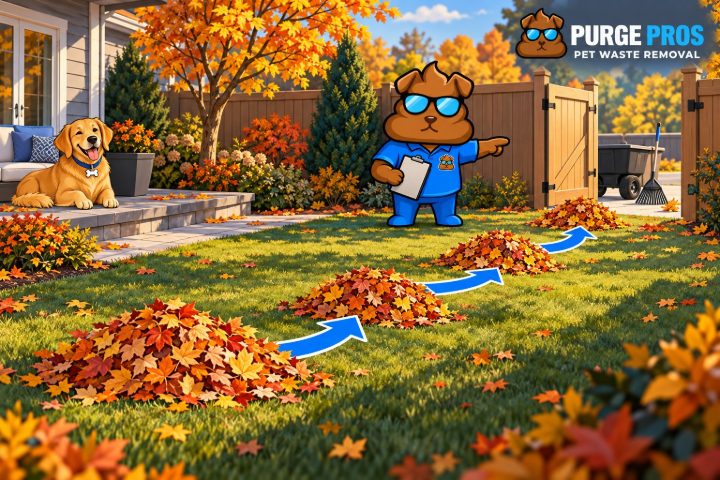
Beside each zone, record conditions that affect the request: long grass, leaf cover, gravel, mud, a restricted section, or a zone that is only open on certain days. Note where dogs may be during entry and who can answer a service-day question. If a landscaping, cleaning, or waste-hauling vendor shares the property, name the handoff without assigning that vendor's work to the scoop request.
For an HOA, apartment community, kennel, or other shared site, clarify who can approve scope, who receives updates, and which areas belong to another party. The shared-space guide explains why responsibility and access belong in the same planning conversation.
Send a map with a short written summary
Attach or describe the map with the property address, dog-use zones, excluded areas, approximate cleanup area, access route, present condition, requested frequency, and the contact authorized to discuss the work. Avoid false precision if the measurement is only an estimate. A requested start date is useful context, but it is not a confirmed service day.
Review the Purge Pros dog waste removal options for the regular scope, then check your ZIP and start a request. Commercial, kennel, or unusually large properties may need the custom-estimate path so the map and the actual scope can be reviewed together.