





Artificial Turf Dog Waste Pickup: What It Covers and What It Does Not
Artificial turf can make a dog-use area look different from a grass lawn, but the first scope question stays simple: which surfaces and sections need dog-waste pickup? Describe the turf area, its edges and the route to it before you compare a cleanup request with a deeper surface-care project.
Clear wording prevents two separate jobs from being blended together. Collecting visible waste is one task. Brushing, rinsing, deodorizing, pressure washing, stain work or other surface maintenance may be a different request with different instructions.
Describe the turf, not just the word backyard
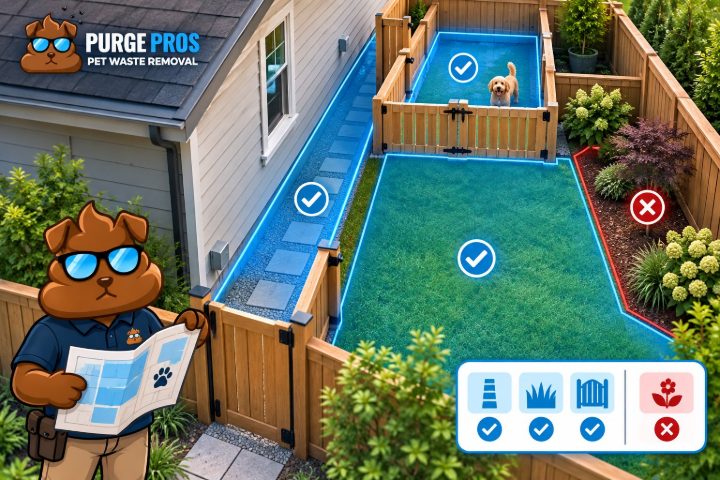
Artificial turf often meets a patio, gravel strip, planting bed or fence line. A request that says only backyard may leave those transitions unclear. Note the approximate turf area, whether a dog uses the entire surface, and whether a separate run or side passage is included.
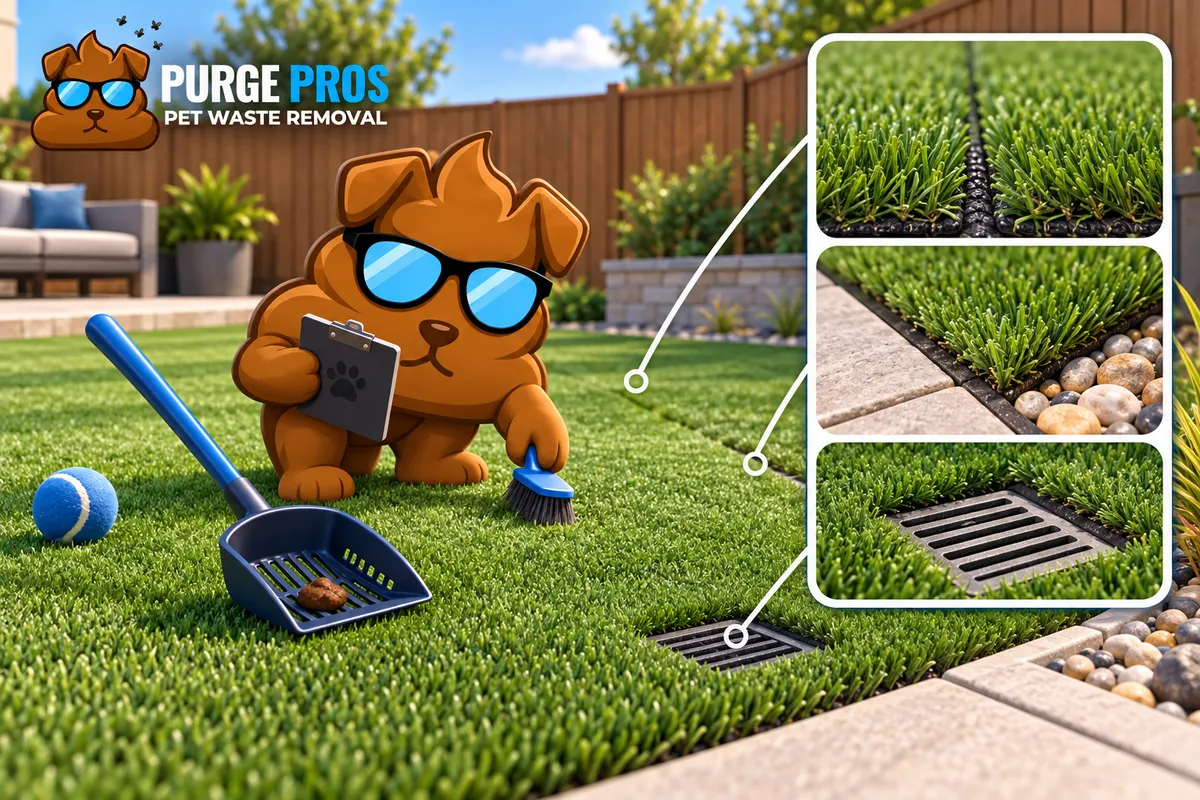
Point out seams, borders, drainage openings, low edges and places where a toy or bowl normally sits. These details help someone understand where visible waste may be found and what needs to be reachable. If the turf is wet, covered by leaves or partly blocked by furniture, include that condition instead of assuming the surface will be inspected as an open lawn.
Keep ordinary pickup expectations specific
Dog-waste pickup means searching the agreed area and collecting waste that can be picked up under the agreed service scope. The surface underneath can still have residue, discoloration, loose infill or an odor that requires a separate conversation. Pickup alone should not be described as washing the turf, restoring it, or proving that it is disinfected.
Artificial turf also varies by installation and manufacturer. Follow the care instructions for your own surface, especially before applying a product or changing how the area is rinsed. A dog-waste service description cannot replace those instructions, and a provider should not guess about a treatment that has not been discussed.
Separate deeper cleaning questions
If your concern is odor or a surface-care step, ask directly what service is being discussed, what area it covers, and what preparation or return-to-use instructions apply. Our published odor guide separates solid-waste removal from deodorizing and explains why one should not be assumed to include the other. The patio expectations guide gives the same scope distinction for hard surfaces.
Avoid combining products just because the turf looks dirty. Note anything already applied and use the relevant label and manufacturer directions. There is no universal product, waiting period or outcome that can be promised for every artificial-turf installation.
Prepare the area for a clear visit
- Move loose toys, bowls and small items so the agreed turf is visible.
- Keep the path and gate usable, including space for the gate to swing.
- Identify any furniture or equipment that should remain in place.
- Keep dogs in the agreed secure location while access is needed.
- Share changes to the surface, boundaries or access before relying on an older note.
Preparation makes the requested scope easier to see; it does not mean you need to perform the cleanup yourself. Heavy furniture, construction debris, fence repairs and unrelated lawn work should be described separately.
Build a request around the actual surface
Explore Purge Pros dog waste removal and check your ZIP and available price. Include the artificial-turf section, adjacent hard surfaces, dog count, preferred frequency and access route. If you need a deeper cleaning or treatment discussion, ask for that specific scope so the final plan says what is included and what remains separate.