
Yard Odor: Poop Removal vs. Deodorizing Explained
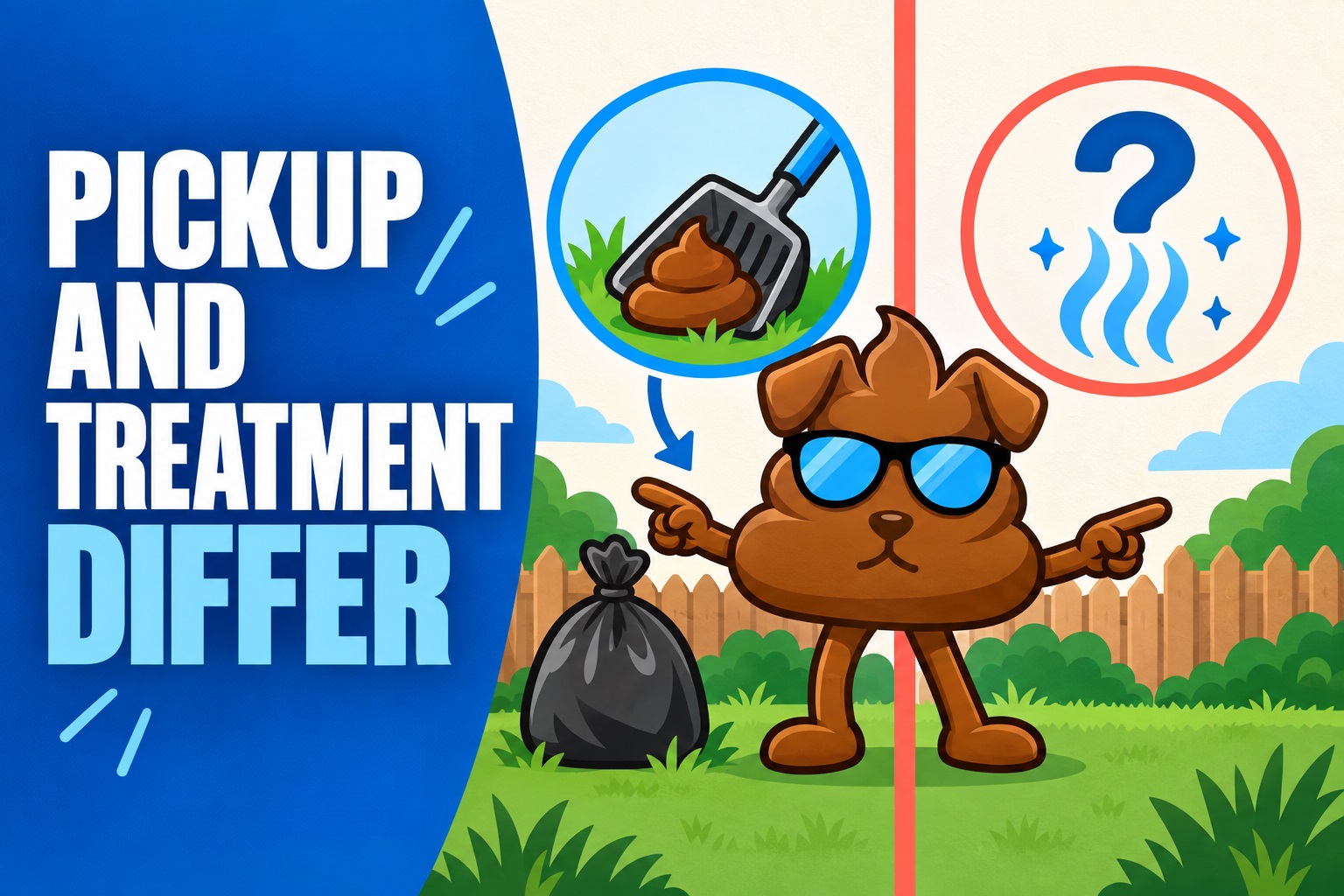
A yard can look free of visible dog waste and still have an unpleasant smell. That is why it helps to separate two questions: has the solid waste been collected, and does a particular area need an odor-treatment discussion?
Start with removal
Collecting solid waste is the basic cleanup task. Walk the agreed service area, including fence edges, favorite dog spots, and any separate run. A spray should not be used as a reason to leave visible waste behind.
If the smell is strongest in one corner, describe that location. A heavily used gravel run presents different conditions from a large lawn or a shaded patio edge. Our guide to gravel, mulch, and dog runs explains why the surface matters.
Deodorizing is a separate service question
Deodorizing is intended to address odor. It does not automatically mean a surface has been disinfected, and an odor improvement does not prove that every possible contaminant has been removed.
Before choosing a treatment, ask what product will be used, what it is intended to do, and whether it is suitable for the specific surface. The answer should match the product label and the provider’s actual procedure.
Purge Pros has a dedicated sanitizing and deodorizing service page. Use it to start a discussion about the area you want treated rather than assuming treatment is included in every scoop visit.
Share useful details about the problem
A short description can help narrow the request:
- Where is the smell strongest?
- Is the area grass, soil, gravel, mulch, concrete, or artificial turf?
- Is the problem constant or more noticeable after rain?
- How many dogs use the area?
- Has another product already been applied?
Avoid mixing cleaners or applying several products in quick succession to chase the smell. Tell the provider about previous applications so the next step can follow the relevant instructions.
Ask about people, pets, and timing
Before application, ask when the treated area can be used again and what preparation is needed. Follow the actual product instructions; there is no universal waiting period that fits every treatment and surface.
For artificial turf, also check the manufacturer’s care requirements. If a provider cannot explain the product or its surface limitations, get that information before scheduling.
Set a realistic goal
Removing new waste regularly makes ongoing upkeep easier, but dogs continue using the yard between visits. A treatment is not a promise that no odor can return. Drainage, surface condition, and repeated use may also require attention beyond scooping.
Start with a cleanup quote, then tell us if odor is an additional concern. We can discuss the requested scope and confirm which services fit your yard.
