





Two Gates and a Side Passage: How to Make a Useful Access Map
Two gates can make a yard flexible for a household and confusing for a first-time visitor. A short access map turns a vague instruction such as use the side gate into a route someone can actually follow. It also makes it easier to identify which dog-use section is behind which entrance.
You do not need a formal site plan. A sheet of paper, a simple phone sketch or a marked-up property diagram is enough when it shows the outside entry, each gate, the passage between them and the sections you want included.
Start from the arrival point
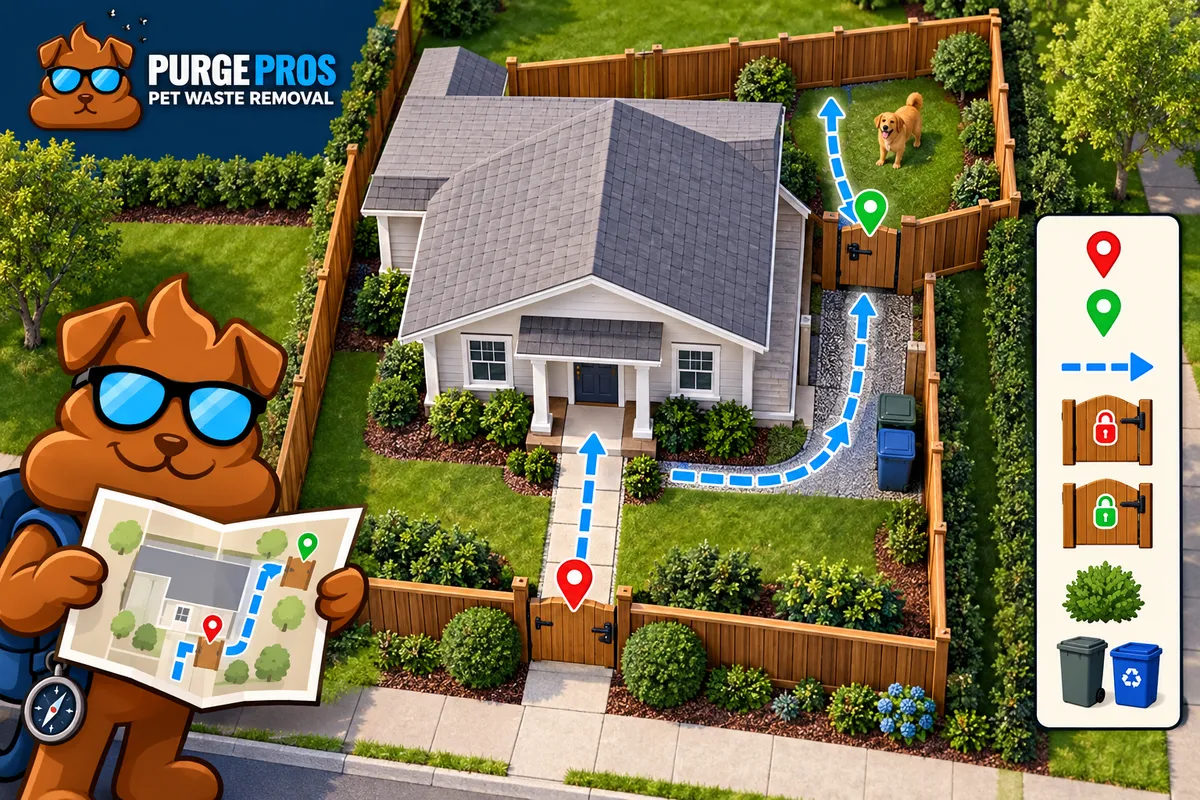
Draw the street, driveway or other agreed arrival side at the bottom of the page. Add the first gate where a person enters the property. Name it by a physical description, such as the gate beside the driveway or the gate on the right side when facing the house. A description that depends on a family nickname can be hard to follow when a property has more than one entrance.
Trace the route from that gate to the main cleanup section. Mark the gate swing, latch, steps, turns and any point where a bin, hose, chair or stored item narrows the path. If the passage is tight, note where equipment must be carried or turned without promising that every route is workable.
Add the second gate as its own route
Now draw the second gate and the section it serves. It may lead to a side run, a back lawn or a separate fenced area. Use a different line or color for the second route so it cannot be mistaken for the first. Mark any interior gate between the two sections and note which gates should remain closed or untouched.
Keep the map focused on access. The sections can be grass, gravel, mulch, artificial turf or hard surface, but the map should make their boundaries and entrances clear. The published yard walk-through checklist can help you add surface and scope notes after the route is drawn.
Use a simple four-part legend
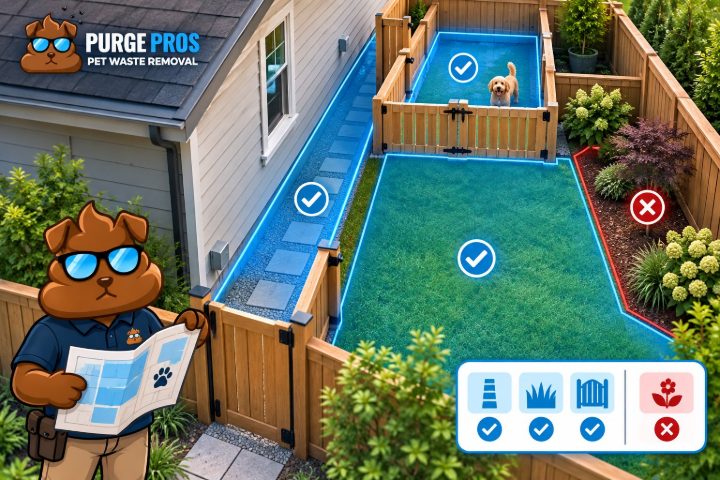
- Included: shade the lawn, run or patio you want searched.
- Excluded: mark planting beds, storage zones or other areas that should stay outside the request.
- Access: draw each gate, path and direction of travel.
- Pause: mark pets, contractors or movable items that need a separate arrangement.
The legend keeps the map from becoming a second set of conflicting instructions. If the route changes, update the drawing and send the current version through the agreed private service channel.
Walk both routes before service day
Open and close each gate yourself. Check for a sticky latch, a sagging panel, a blocked swing or a path that becomes muddy or crowded. Look at the point where the narrow passage meets the second section. A clear destination does not help if the entry route is closed by a parked item.
Plan where the dogs will be while gates are open. Do not assume that an old instruction still works after a fence change, landscaping project or new lock. The existing gate-access guide covers current instructions, privacy for access details and closure expectations.
Send the map with a concise note
Include the preferred first gate, the route to each service section, the gate that should not be used, the pet arrangement and any obstacle the team needs to know about. Keep codes and precise access information out of public posts. If a contractor, sitter or household member changes the setup, assign one person to send the update.
When you are ready, explore Purge Pros dog waste removal and check your ZIP and price options. A clear map supports the request; the service address, available route and final day still require confirmation.