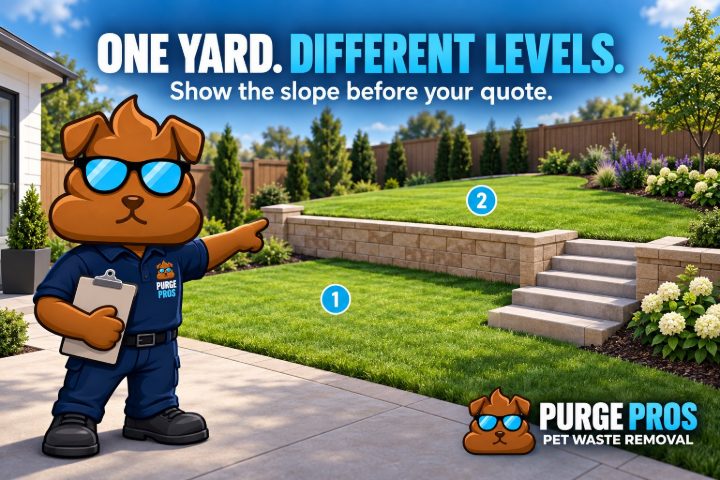






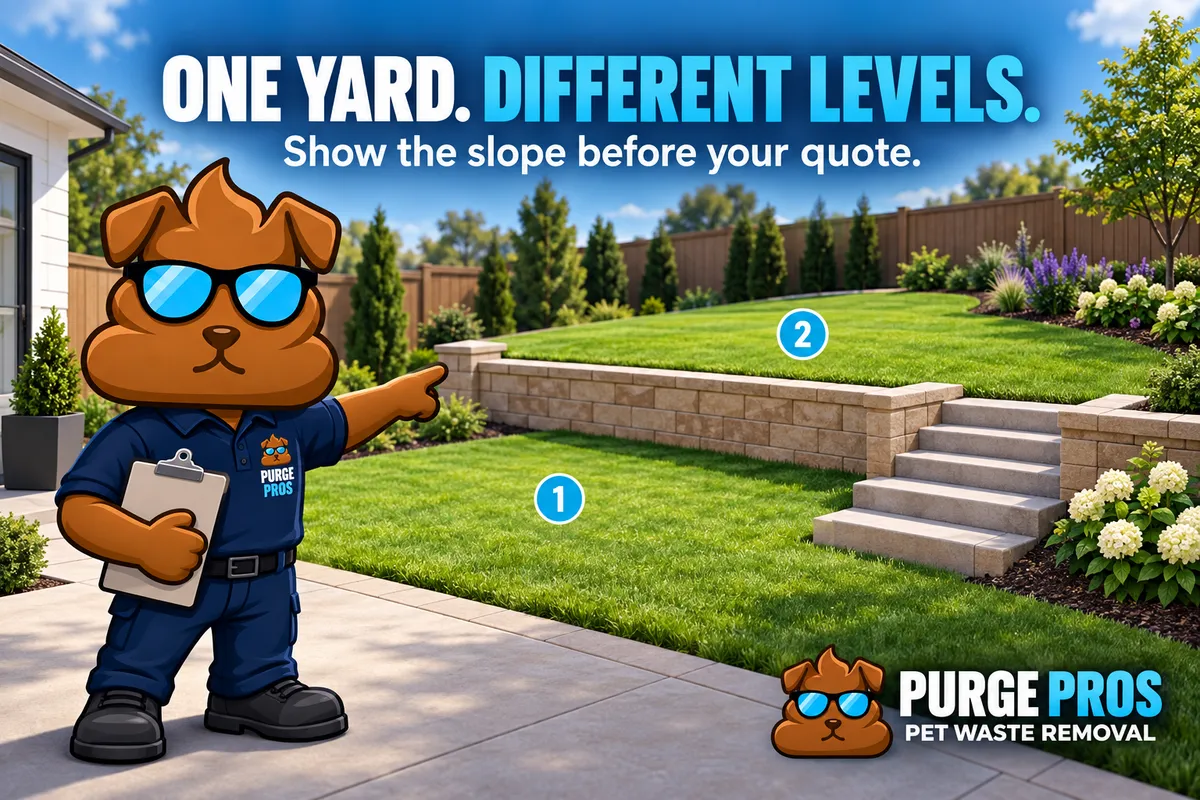
Sloped or Terraced Yard? How to Describe Each Level for Dog Waste Pickup
A sloped or terraced yard can make a simple cleanup request harder to picture. The upper lawn, a lower patch of grass and the ground between them may be connected, separated by steps, or divided by a planting bed. A useful request makes those differences visible. It describes the areas you want considered, how each relates to the others, and the route between them. It does not need to be a survey or a promise that every section fits a particular service plan.
Map each dog-use level
Start with the places your dog actually uses. On a simple sketch, label the upper lawn, lower level, any flat landing, and any separate side area or run. Decide which areas you want included in the request. A word such as “backyard” can cover several different surfaces, so list sections individually when the layout changes from one level to another.
Use fixed points to make the drawing easy to understand: the house, a gate, a fence corner, or a patio edge. Label each level in relation to those points instead of relying only on “up top” or “down below.” If a garden bed, mulch strip or other area sits between two lawn sections, draw it as a divider and say whether it is outside the requested area.
Show how the levels connect
An overhead sketch may show where the grass is but hide the change in elevation. Add a side note or simple side-view line for a slope, steps, a retaining wall or a narrow landing. Mark the route from the agreed entry to each requested section, including gates, stairs, turns and places where a path ends. If a wall or bed separates two lawns, do not make the drawing look like there is a walkable connection where there is none.
Keep the dog-use map and the access route in view at the same time. The areas a dog uses answer one question; the physical route someone would take answers another. If the route to one level is unclear from your sketch, describe the uncertainty and ask the team what detail would help clarify the request.
Separate lawn from landscaping
Sloped yards often meet landscape features at unusual angles. Mark lawn edges, planting beds, rock borders, drainage areas, patios and other surfaces separately. If you want more than one kind of surface considered, identify each one rather than treating the whole property as lawn. Note any narrow strip or corner that is easy to miss from the main gate.
This is also where an approximate measurement can help. Record a rough length and width for each distinct section, label the measurements as estimates, and avoid counting the same landing or connecting strip twice. The yard-area measurement guide explains a simple way to estimate irregular outdoor sections; for a terraced layout, keep each level separate on the sketch before adding any figures.
Describe the current conditions plainly
Tell the team if a requested area is partly blocked, recently changed, or different from the sketch. Mention temporary items such as a closed gate, a hose across a path, or a piece of lawn currently being replanted when that affects the route or boundary you want reviewed. Keep the note specific and current. Avoid assuming that a provider can reach an area through the house, over a wall, or across a section you have not identified.
A short note can be more useful than a complicated drawing: “upper grass behind the house; steps to a lower lawn; planting bed between them; please review both grass areas.” Adapt the wording to your own layout, and say which section is excluded if only one level belongs in the request.
Turn the sketch into a clear request
Before sending a request, check that your notes identify the dog-use areas, the surface of each area, the level changes, the physical route and anything outside the intended boundary. The published yard walk-through checklist offers another way to review the details that can make a cleanup request clearer.
To learn about Purge Pros dog waste removal or begin a request, use the price and ZIP tool. Describe the levels when confirming the service details with our team.