





How to Measure a Scoopable Outdoor Area With Simple Rectangles
You do not need a professional survey to describe the outdoor space you want checked for dog waste. A few honest measurements can make a cleanup request easier to explain, especially when the yard is an L-shape or includes a narrow side section. The goal is a useful estimate of the included cleanup area, not a perfect map of the entire property.
Rectangles work well because the arithmetic is simple and the result is easy to check. Sketch the areas your dogs use, divide an irregular outline into pieces, and keep every included piece visible on the page.
Start with the sections you actually want serviced
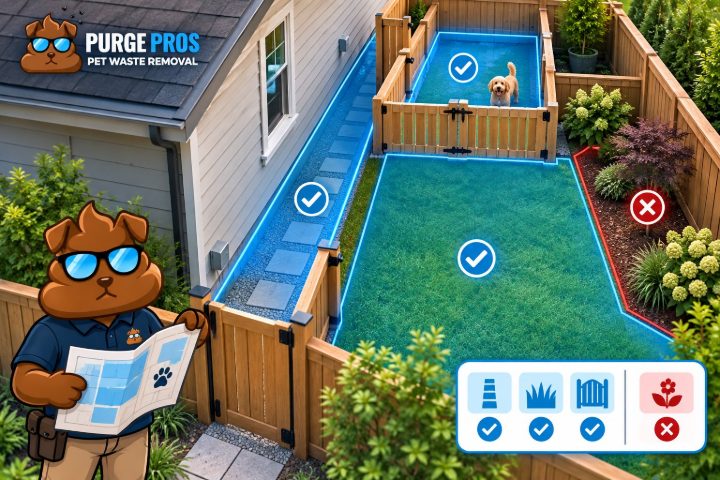
Walk the route your dogs normally take outside. Mark the main lawn, a side strip, a separate run, or a patio where pickup is needed. Mark planting beds, a driveway, the house footprint, and other areas that should stay outside the request. If one part is behind another gate, draw it as its own section instead of treating the yard as one uninterrupted shape.
Surface matters too. Write down whether each rectangle is grass, gravel, mulch, artificial turf, or a hard surface. A measurement without a surface note can still leave an important scope question unanswered.
Work one rectangle at a time
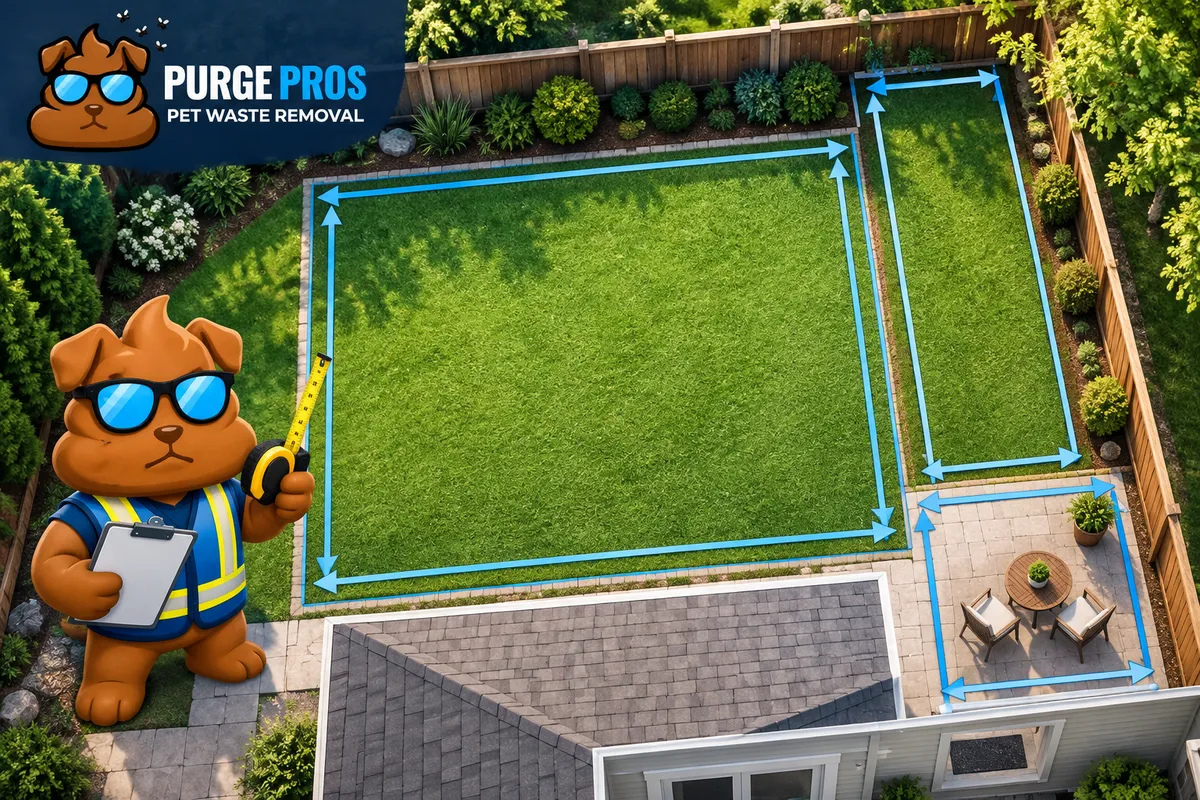
Suppose a sketch has three included areas:
- Main lawn: 30 feet long by 24 feet wide = 720 square feet.
- Narrow side strip: 28 feet long by 6 feet wide = 168 square feet.
- Patio where the dogs use the space: 10 feet by 12 feet = 120 square feet.
Add the included pieces: 720 + 168 + 120 = 1,008 square feet. If the patio is not part of the requested pickup, remove that rectangle and the working total becomes 888 square feet. Showing both versions makes the decision visible before you ask for a quote.
This is a planning example, not a promised service classification. Measure inside the boundaries you intend to describe, and do not count a section twice where two rectangles meet. If a shed or excluded garden bed takes up a rectangular corner, subtract that corner from the larger piece rather than quietly rounding it into the total.
Handle odd shapes without pretending they are precise
An L-shaped lawn can be split into a broad rectangle and a narrower rectangle. A curved edge can be approximated with a few smaller rectangles, leaving a note that the edge is irregular. Use the same method for separate dog-use areas. If your estimate is close to a pricing range boundary, say that it is approximate and ask the team to review the scope rather than automatically choosing the smaller range.
A tape measure is useful, but it is not required for a first conversation. A sketch with approximate length, width, surface and access notes is more helpful than a very exact measurement of an area you do not want serviced.
Pair the area estimate with an access check
After totaling the rectangles, trace how someone reaches each one. Note the outside gate, any interior gate, steps, a narrow turn, or a path that becomes blocked by bins or furniture. The published yard walk-through checklist covers the details to review before sending a request, and the surface guide explains why grass, gravel, mulch and dog runs deserve separate notes.
Keep the dog count, visit frequency and selected sections beside the drawing. Those inputs describe different parts of a cleanup plan; the rectangle total does not replace them.
Turn the sketch into a clear request
For standard eligible plans, the Purge Pros price tool uses your dog count, frequency, yard-size selection and service sections. Requests involving more than an acre of cleanup area, commercial property or kennel needs follow the custom-estimate path. Use your sketch to check your ZIP and see the available price options, then describe anything the simple rectangles cannot capture. You can also review Purge Pros dog waste removal service before deciding which areas belong in the request.