





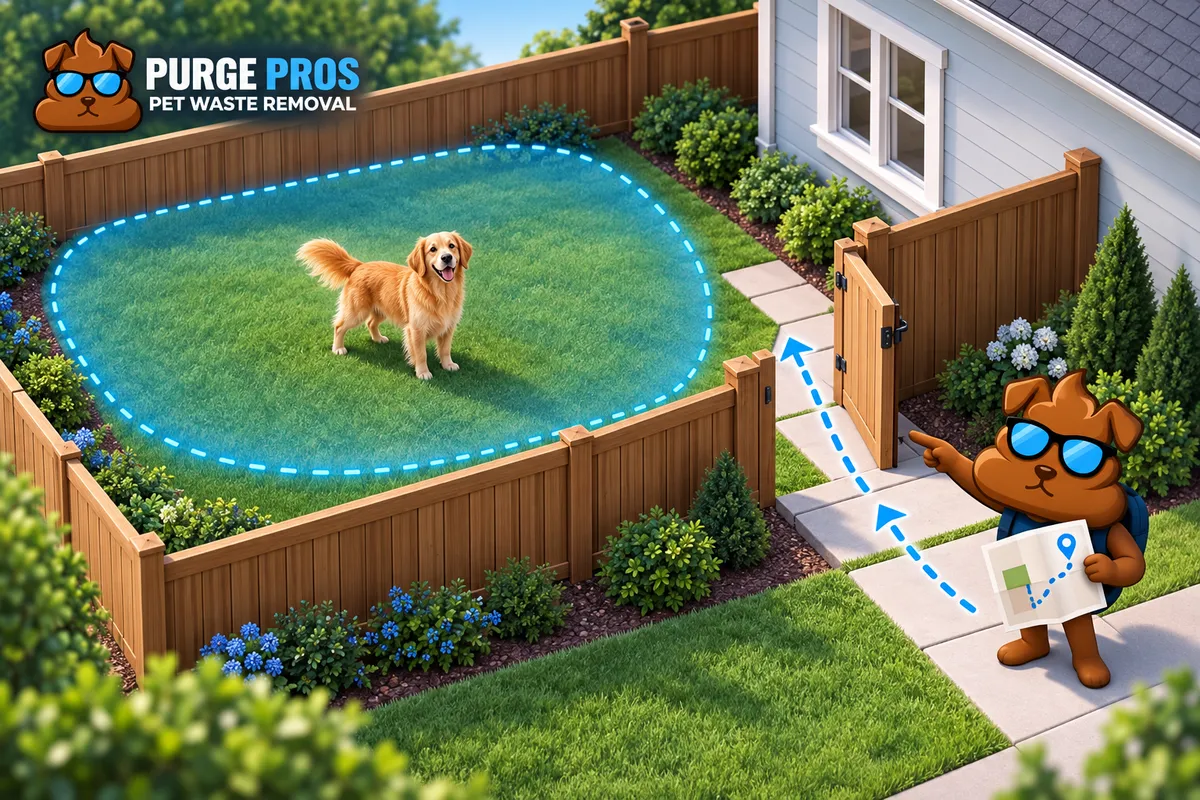
Invisible Fences and Dog Waste Service: Plan the Physical Access Too
An invisible or electronic fence can help define where a dog is expected to stay, but it does not create a doorway for a person. A dog-waste service plan still needs a physical route into every agreed cleanup section, plus a clear arrangement for the dog while the gate is open.
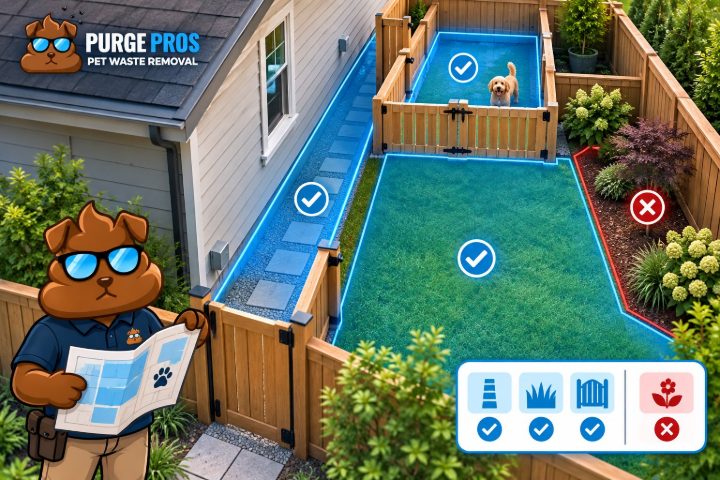
Think of the setup as two related maps. One map shows where the dog uses the yard. The other shows how a service provider reaches the yard from outside the property. Keeping those maps separate prevents a boundary system from doing work it was never meant to do.
The dog boundary and the access route answer different questions
An invisible boundary may mark a lawn, run or other dog-use area without changing the fence, gate or surface. It does not tell a visitor which entrance to use, whether a side gate opens, or whether a path is clear. A person should not be expected to cross the house, a neighboring property or an unapproved area just because the dog can move there.
Draw the physical fence and gate on your yard sketch. Then add the dog-use boundary inside it if that helps explain where waste is likely to be found. Label the sections you want searched and the sections that should remain outside the request.
Plan the gate before the dog plan
Walk the route from the street, driveway or other agreed entry to the first service section. Check the gate latch, swing space, steps and any narrow turn. If a second dog-use area sits behind an interior gate, include that gate and its instructions as well. The published gate-access checklist covers the physical details that are easy to overlook.
Do not rely on the invisible boundary to keep a dog away from an open gate. Decide where the dog will be while someone enters, walks between sections or closes the gate. The arrangement may be indoors, in another secure area, or another plan agreed in advance. The important part is that it is actionable and current.
Explain the equipment without making a technical promise
A provider may not know how a particular boundary system is installed or whether it is active. You do not need to prove the system works in order to describe the cleanup request. Tell the team what the dog-use zone is, where the physical gate is, and what pet arrangement you will use.
If a boundary line, receiver, collar, buried wire or control setting affects your household routine, follow the equipment maker's instructions. Keep those technical questions separate from the pickup scope. A service visit should not be described as testing, repairing or guaranteeing an invisible fence.
Write one clear access note
- Physical entry: identify the gate by where it is, not only by a family nickname.
- Service sections: list the lawn, side strip, run or patio that belongs in the request.
- Dog plan: state where pets will stay during entry and cleanup.
- Closure: mention any latch movement or special step the team should know.
- Changes: send an update when the gate, fence or dog-use area changes.
If you are away during the visit, the away-from-home guide can help you settle access, communication and pet arrangements. Keep codes and detailed entry instructions in direct service communication rather than a public comment.
Request the service around the real route
Review Purge Pros dog waste removal, then check your ZIP and build a price request. Include the physical access route and dog-use sections together. A supported ZIP begins the request, while the full address, route and service day still need to be confirmed before relying on the plan.