





Hosting Visiting Dogs? Share the Temporary Yard Details
Hosting a visiting dog can change how a yard is used for a weekend, a holiday, a family visit, or a short foster arrangement. The dog may use a different gate, a side run, or a section that normally sees little traffic. The change may be temporary, but it is still useful information when a cleanup visit is approaching.
Share the temporary facts that affect the yard and access. Do not assume a visiting dog automatically changes the service plan, adds a new section, or creates a different frequency without a review.
Describe the temporary household change
Tell the service team how many dogs will be using the property, the dates or general period of the visit, and whether the visiting dog will use the same outdoor areas as your own dog. If you do not know the exact dates yet, say that plainly. A temporary dog count is context for the conversation, not a promise that a price or schedule will change automatically.
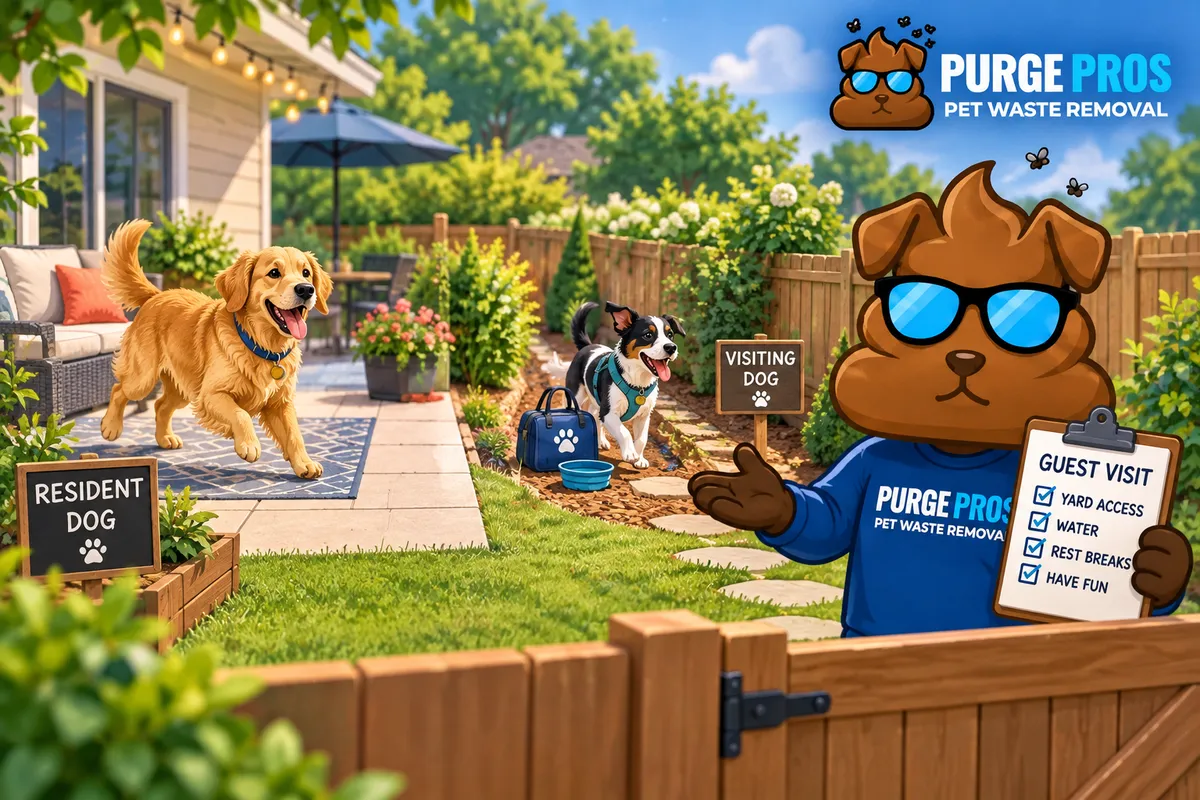
Look at the yard as it will be used while the guest dog is there. A dog that normally stays in the back yard may use a side gate, patio, or separate run when visitors arrive. The multiple-dog coverage guide can help you think through zones without treating every dog as if it uses the property in the same way.
Point out the areas that may become busy
List the sections where the guest dog may relieve itself and the sections that should remain closed. Include a patio edge, narrow run, or second lawn if those areas are part of the temporary routine. If the visiting dog cannot enter a particular space, mark that too. Clear boundaries are more useful than a general note that “the dogs will be outside more.”
If a toy bin, temporary crate, baby gate, or exercise pen changes the route, move it before service when possible or tell the team what to expect. Separate pet supervision and furniture moving from dog-waste pickup. The cleanup visit does not replace the host's responsibility for the dogs or the condition of the household.
Coordinate access and pet safety
Decide who will keep the dogs secure while the team enters and works. Tell family members, a sitter, or another helper which gate is used and who should answer a question. Keep the guest dog's behavior and the access plan in the same conversation; “the dog is usually fine” is not an actionable entry arrangement.
Use the dog-sitter access checklist for the entrance, pet location, private access details, and changes since the last visit. If a temporary lock or gate arrangement is needed, communicate it before the visit and confirm that the team received it.
Choose what to update and when
For a short visit with no change to the serviced areas, a note about the dogs and access may be enough. If the dogs are using a new section, the yard is more heavily used, or the visit overlaps with a gate or landscaping change, describe those conditions before relying on the existing scope. Ask what should be reviewed rather than promising that an old plan covers a new area.
A request to discuss a temporary change is not a confirmed appointment or a guarantee of a different route. Keep the household's plan realistic if the visit dates shift or the dogs return home earlier than expected.
Recheck after the guests leave
Once the visiting dogs are gone, walk the areas they used, return gates and furniture to their intended positions, and tell the team if the regular service sections or access details changed. A brief follow-up prevents a temporary arrangement from becoming a stale instruction.
For ongoing help, review Purge Pros dog waste removal and check your ZIP and build a quote. Share the actual dogs, areas, and access plan so the service discussion stays tied to the yard in front of you.