
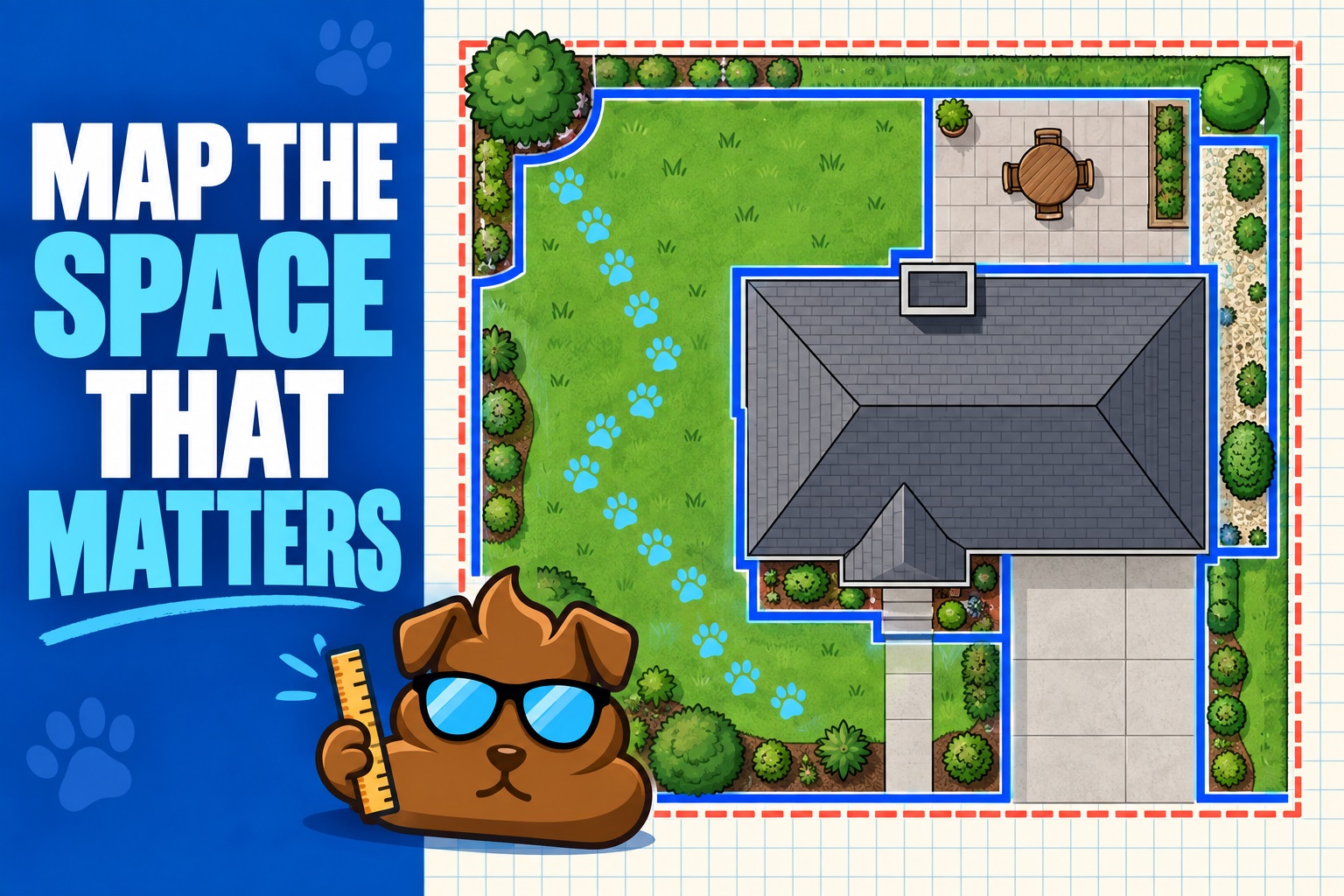
Yard Size vs. Lot Size: What Counts for Poop Scooping?
When a poop-scooping quote asks for yard size, it is asking about the space that needs cleanup. That can be much smaller than the size of the property on a real-estate listing. It can also include a side run or front section that is easy to forget while looking out the back door.
A rough, honest description of the cleanup area is more helpful than a precise measurement of the wrong space.
Walk the areas your dogs use
Start at the door your dogs normally use and follow their usual outdoor route. Note the lawn, side passages, separate fenced sections, and any hard surfaces where you want waste picked up. Decide which areas are included in your request before choosing a size range.
Do not automatically count the house footprint, driveway, or an unused area you do not want serviced. Equally, do not leave out a second section because it is small: the team still needs to find and access it.
For example, a home on a quarter-acre parcel may have a much smaller cleanup lawn once the house, driveway, and excluded landscaping are considered. That observation does not establish the exact service size; it tells you why the parcel number alone is not enough.
Make a simple sketch
You do not need a professional survey to describe a routine cleanup request. Draw the backyard as one shape, add any front or side sections, and mark the gates between them. Label areas you want included and areas that should be left alone.
If you can estimate the length and width of a rectangular lawn in feet, multiplying them gives approximate square feet. One acre is 43,560 square feet; one eighth is 5,445 square feet and one quarter is 10,890 square feet. Irregular shapes can be split into smaller rectangles for an estimate.
These calculations are planning aids, not a guarantee of the final service classification. If your estimate is close to a range boundary, explain that uncertainty instead of automatically choosing the lower range.
Describe surfaces and obstacles
A lawn, gravel run, mulched edge, and patio do not look or behave the same during pickup. Mention them when describing the property. Include steps, steep areas, overgrown sections, locked interior gates, or anything that makes one part of the yard difficult to reach.
It also helps to identify where waste tends to collect. A favorite corner behind a shed may deserve a note even when the rest of the lawn is open and easy to see. Read our guide to gravel and dog runs for surface-specific planning questions.
Select the sections as well as the size
The Purge Pros price tool asks about dog count, frequency, yard size, and areas. These inputs describe different parts of the work. Choosing a large size range does not replace selecting the separate yard sections you need serviced.
Review your selections together before submitting: the dogs using the space, the total included area, and the front/back/side sections. For more than an acre of cleanup area or commercial and kennel needs, request a custom estimate rather than squeezing the property into a standard option.
Update the plan when the yard changes
If you add a fence, open a previously unused side yard, or change where your dogs spend time, let the team know. A good original description cannot account for a later change that was never communicated.
Use your sketch to check your price, or review the service FAQs if you are unsure what to include. The goal is an accurate shared picture of the work, not a perfect drawing.
Once your yard sections are clear, review our dog waste removal service to compare the included pickup and haul-away with the scope you need.
