





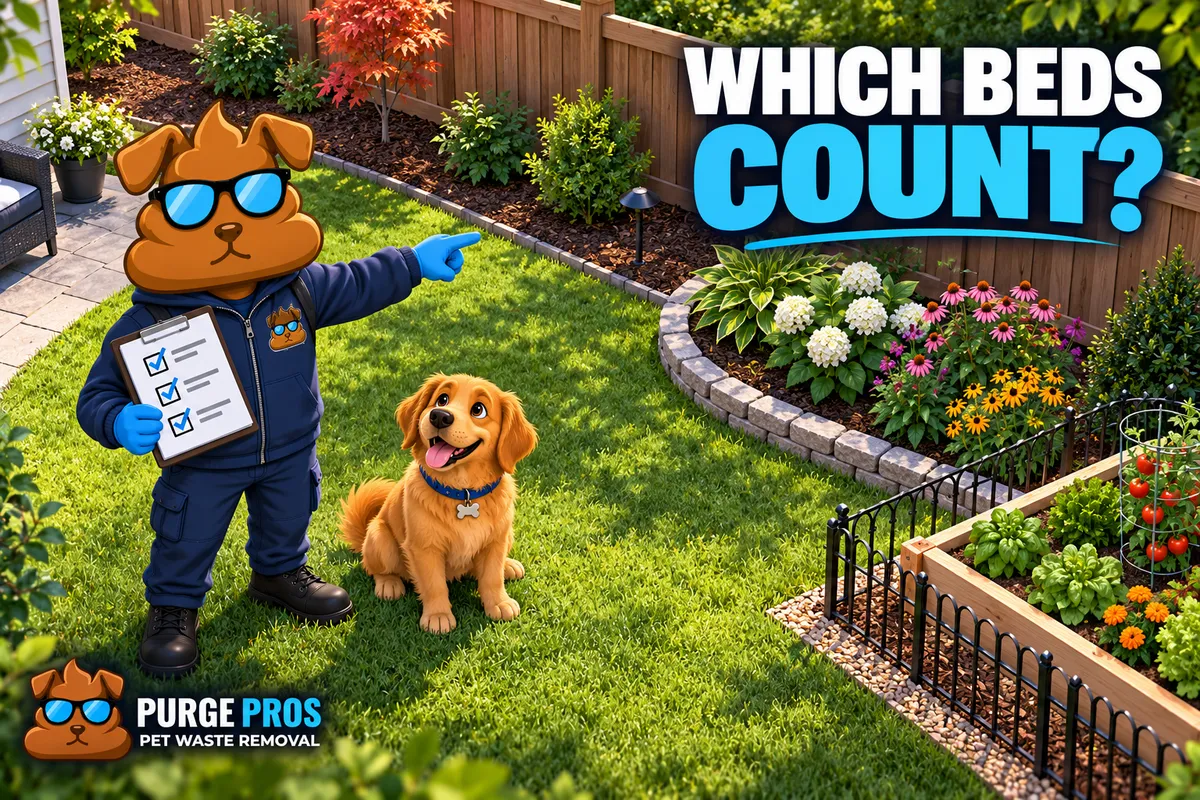
Garden Beds and Borders: Decide What Counts in a Dog Waste Cleanup
Lawn is straightforward. Raised beds, mulched borders and planted corners are where expectations drift. Some dogs never set foot in them. Others treat the hostas as their preferred spot. Deciding which planted areas are part of the cleanup, and saying so clearly, prevents missed spots and trampled plants.
Start with where the dog actually goes
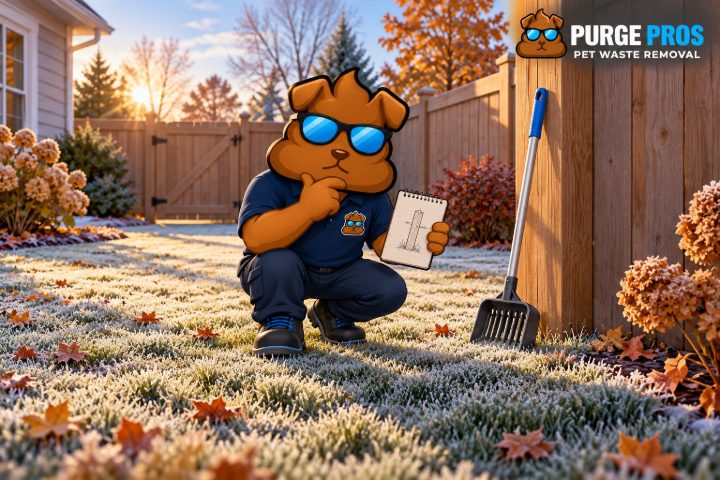
Watch for a few days before you decide anything. If your dog stays on the grass, the beds can simply be left out. If the dog regularly uses a mulched strip along the fence or a gap behind the shrubs, that area is a dog-use area whether it looks like one or not, and it belongs on the list of places that get checked.
Sort planted areas into three groups
A simple way to describe a yard is to put each planted area into one of three groups:
Fair game. Open mulch, gravel borders and ground-level beds the dog uses and a person can step into without damaging anything.
Reach from the edge. Dense or delicate plantings where waste near the border can be reached from outside, but walking through would do more harm than good.
Off limits. Vegetable beds, newly seeded or newly planted areas, and anything fenced or netted to keep the dog out. Keep the dog out of vegetable beds, and if waste does end up in one, handle it yourself.
Three groups keep it simple, and they are easy to pass along in a sentence or two.
Make the boundaries easy to see
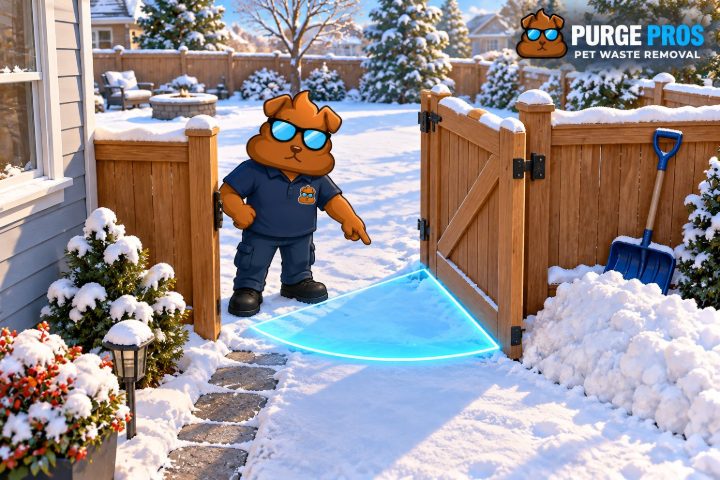
A bed with a clear edge is easy to respect. A bed that fades into the lawn is not, especially in fall when plants die back and leaves cover everything. Edging, a row of stones or a low border makes the line obvious to anyone working in the yard. If you have just planted bulbs or seeded a patch, a few stakes or a short run of garden fencing marks it until it fills in.
If you are still deciding where beds and dog areas should go, our practical backyard layout guide walks through arranging play, planting and cleanup zones so they stay out of each other's way.
Know how the surface changes the job
Waste is harder to spot on dark mulch than on grass, and it sits differently on gravel or bark. That affects how carefully an area has to be checked. The guide to cleanup on gravel, mulch and dog runs explains what to expect from each surface.
Say it once, in writing
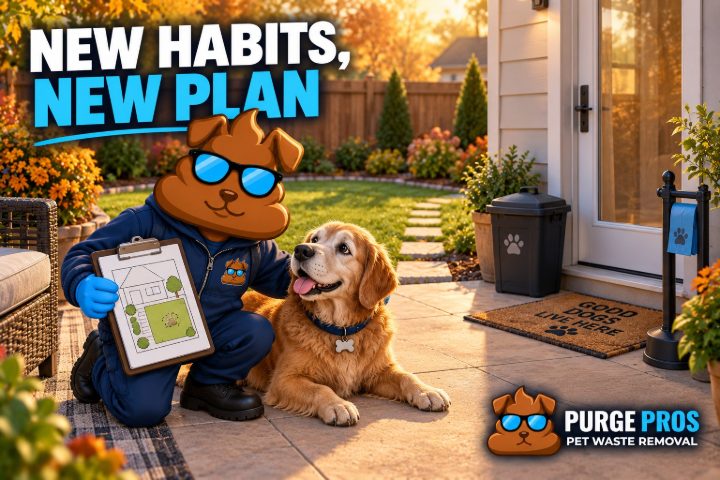
Whoever handles the cleanup, whether that is you, a family member or a service, works better from one clear sentence about planted areas: which beds are fair game, which to reach from the edge and which are off limits. A note such as “mulch strip along the back fence is a dog area; raised vegetable beds are off limits” removes the guesswork. If you use a service, share that note when you request it, and confirm the scope with them. Update it when the yard changes, for example after a new bed goes in or a border comes out.
If you would like help with the regular yard routine, see how Purge Pros dog waste removal works or check your ZIP and see your per-visit price. Service requests still need address and route confirmation.